Saturday, February 19, 2011

Thomas Paine and the Wisconsin Workers

A quick note: I see that Tea Party groups are organizing a march to counter the massive protests being spearheaded by pubic workers in Wisconsin, a response to the governors' attempt to essentially eliminate public sector unions. I will be shocked if, as usual, the founders' eighteenth century economic thought and broad ideas are not easily converted by that march into a standard union-busting drumbeat from the days of the Pinkertons.

Uncomfortably for the Tea Partiers, when we examine the actual record of a key revolutionary icon, Thomas Paine, we find a man who himself was an agitator for justice and dignity for public workers. Paine's legacy for U.S. independence is of course vital; he famously wrote the pamphlet Common Sense, which played a crucial part in moving many North American colonists firmly in support of independence and the construction of a democratic state. Paine, however, was not a long-time resident of the colonies - in fact he only moved to Philadelphia in 1774.

What was he doing before? Well, most immediately prior, he had worked as an Officer of Excise, a tax collector, in Lewes, England. That is until he joined a movement of fellow excise officers demanding that their wages be increased to allow these public servants to escape poverty. Throughout the winter of 1772-1773 Paine worked to organize and prepare a petition to Parliament, an attempt which failed. The following year Paine was fired from his job and would make his way to Philadelphia.

The main contribution Paine made to this effort was to write his first political pamphlet, The Case of the Officers of Excise. While many of the specifics in this piece are more relevant to the eighteenth century world, in it we can find some of the same principles at work in Wisconsin today:

On the problems of low wages:

When a Year’s Salary is mentioned in the Gross, it acquires a Degree of Consequence from its Sound, which it would not have if separated into daily Payments, and if the Charges attending the receiving and other unavoidable Expences were considered with it. Fifty Pounds a Year, and One Shilling and Ninepence Farthing a Day. carry as different Degrees of Significancy with them, as My Lord’s Steward, and the Steward’s Labourer; and yet an Out-Ride Officer in the Excise, under the Name of Fifty Pounds a Year, receives for himself no more than One Shilling and Ninepence Farthing a Day.

After Tax, Charity, and sitting Expences are deducted, there remains very little more than Forty-six pounds; and the expences of Horse-keeping in many Places cannot be brought under Fourteen Pounds a Year, besides the Purchase at first, and the Hazard of Life, which reduces it to Thirty-two Pounds per Annum, or One Shilling and Ninepence Farthing per Day.

On the questions of wealth and poverty:
The Rich, in Ease and Affluence, may think I have drawn an unnatural Portrait; but could they descend to the cold Regions of Want, the Circle of Polar Poverty, they would find their Opinions changing with the Climate. There are Habits of Thinking peculiar to different Conditions, and to find them out is truly to study Mankind.
The final call for justice:

With an Addition of Salary, the Excise would wear a new Aspect, and recover its former Constitution. Languor and Neglect would give Place to Care and Chearfulness. Men of Reputation and Abilities would seek after it, and finding a comfortable Maintenance, would stick to it. The unworthy and the incapable would be rejected; the Power of Superiors be re-established, and Laws and Instructions receive new Force.

Monday, January 17, 2011

The King Identity

I have already written a version of the now requisite "Martin Luther King was a progressive/radical" entry. I am confident I will write similar posts in the future. While having King as a sanctified American hero is certainly a merited and wonderful reality, it has also led to a collective amnesia about the scope of his vision. Put simply, King was both a transcendent figure who could rise above politics and someone who progressives and radicals clearly can claim as a member of the family. To claim otherwise requires a heady mixture of denial and ignorance.

Given that, let me talk about a (hopefully) upcoming event that holds potential to introduce the complete King to a larger audience. Recently, I came across the news that English director Paul Greengrass has written a screenplay and is looking to make a film entitled Memphis. Greengrass is best known to a wide audience as the directer of the second two Bourne movies. According to NY Mag, "Greengrass wrote the movie . . . based on his own original research, and that it looks at King’s life while trying to organize the city’s sanitation workers in the spring of 1968, just before his murder on April 4 of that year."

While some of the web gossip is concentrating on the potential for the movie to tackle conspiracy theories around King's assassination, I hope that is not the case. Certainly Greengrass has trafficked in conspiratorial thinking in the Bourne movies, as well as in his (in my opinion) very underrated film Green Zone, but he is not an Oliver Stone. Focusing on conspiracies would, among other problems, distract from the true (and very fraught) drama one can find in the story of King's involvement in the Memphis strike and the turmoil of his own life in those last days.

While a director best known for creating incredibly visceral action scenes might seem problematic, my eagerness about him tackling this project comes from some of Greengrass' other films, namely Bloody Sunday and United 93. Both films are superb examples of how to compellingly present historical episodes on screen; they hew closely to the real history, while creating real tension and drama. For the moment, I will focus on Bloody Sunday, which recreates the events of January 30, 1972, when English soldiers killed thirteen protesters in Derry, Ireland. The film has been compared to the Battle of Algiers, which is both an apt comparison and an impressive complement.

As with The Battle of Algiers, Bloody Sunday evinces an intense fascination with the mechanics of political activism (how do protests get organized, the internal politics of movements, etc). This in itself is promising, for the politics of King's involvement in the strike and the dynamics between the many players are a vital part of this story. Furthermore, Bloody Sunday shows not only Greengrass' interest in these matters, but also his ability, through sharp dialogue, strong acting, and his ever restless camera, to keep such scenes interesting and even spellbinding. In addition, Bloody Sunday, while clearly taking a side, allows for the nuances and complexities of politics to shine; time is given to the English soldiers to show the context they were operating in, without excusing their actions.

To make this more concrete, here is a scene near the end of Bloody Sunday which captures much of what I mentioned above:


Suffice it to say, I believe Greengrass to be an excellent person for this job. Returning to the idea of historical memory, the potential of a major film being released centered on King's work in Memphis is quite exciting. While I doubt the film will transform the popular narrative about King, it can at least open up an avenue for challenging the "Santa Claus" version that dominates popular discourse. By choosing to depict King not during his heights at Birmingham or Selma, but rather as a much reviled radical prophet, Greengrass' film can educate more people about the King who stood firmly for workers' rights and believed that true justice meant profound change to our economy and society.

Thursday, January 6, 2011

"The Best and the Brightest"

Governor Christie committed a verbal irony that's quite common, but still worthy of note. In calling for a new system for hiring school superintendents he stated that the new system would allow the hiring of "the best and brightest." This phrase has of course entered the popular lexicon via David Halberstam's book on the Vietnam War. Of course, Halberstam meant the term to be ironic; a bitter comment on how individuals and groups possessing the most impressive of credentials can still exhibit no real understanding of a situation and make horrific and disastrous decisions as a result.

Wednesday, January 5, 2011

If By "Anybody" You Mean "Most Men"

Anton Scalia has raised a ruckus with his statement that the Fourteenth Amendment does not protect women or GLBTQ folks from discrimination. I will leave to those more knowledgeable to parse the legal questions. What I found troubling were certain underlying assumptions embedded in the language of the question and Scalia's response. Here is the text of the question:
California Lawyer: "In 1868, when the 39th Congress was debating and ultimately proposing the 14th Amendment, I don't think anybody would have thought that equal protection applied to sex discrimination, or certainly not to sexual orientation."
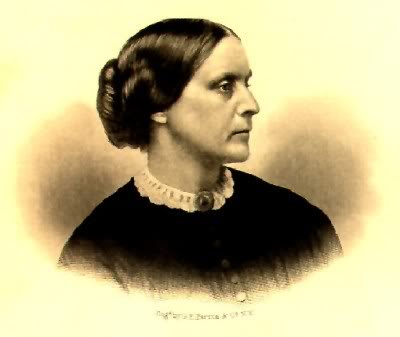
What appears problematic is the idea that it is foolish to think "anybody" would have conceived of the Fourteenth Amendment protecting women at that time. Tell it to Susan B. Anthony! As noted in this piece, feminist activists of the time advanced their own interpretation focusing on section 1's use of gender neutral language to make the case that the Fourteenth Amendment did protect suffrage rights, at the very least. This in fact led to a great act of symbolic protest as women activists in 10 states attempted (and in a few cases) succeeded in casting ballots, leading to Anthony being put on trial.

More broadly, we must be wary of statements regarding prevailing views in society which it is said that "everybody" or "nobody" held a certain belief. Such assertions usually consist of taking a certain sub-group of people (often "most white men") and universalizing their perspective to all of society. In doing so, we erase whole populations and histories; making unjust ideas and structures seem a universal norm. Men had greater power in the 1860s and could create laws and social structures enforcing that superiority; that does not mean everyone believed that this was "the way it ought to be."

Monday, January 3, 2011

Forgetting Reconstruction

The end of last year witnessed a perfect storm hit of news stories on race and history in the United States. At one end was Mississippi governor Haley Barbour’s nostalgic reminisces of the Citizens Councils, which attempted to put a “respectable” (and more effective) face to white supremacy. The story breaking on the 150th anniversary of South Carolina’s declaration of secession seemed too perfect as a demonstration of how alive the gap between ideals and realities of equality remain.

At the same time, these incidents illuminate a profound deficit in how the history of racism and the struggle for equal rights are remembered. For in our popular imagination, the great struggles over these issues exist at two poles separated by exactly a century: the Civil War and the Civil Rights Movement. With regards to historical memory, the Civil War in the next years is sure to burn brightly, as the 150th anniversaries of innumerable battles, the Emancipation Proclamation, etc arrive. However, as obviously significant as the Civil War is, focusing on the actual conflict does a disservice to understanding the full history. Certainly the war created many dramatic and concrete transformations, most notably the end of slavery and the intensification of modern capitalism’s emergence. Yet, especially when talking about the African-American community, the war’s greatest importance lies in the possibilities it created for even deeper changes and which, albeit with limitations, were seized upon during Reconstruction.

As well known as the Civil War’s contours are, outside of academics who study it, Reconstruction appears lost in a haze. The single best known depiction of the period remains Gone With the Wind, which traffics in the frankly racist viewpoint which received academic validation from historians of the “Dunning School” (think a somewhat toned down Birth of a Nation in footnoted book form). For the Dunning school, Reconstruction was a tragedy in which the North (or more specifically the Radical Republicans) imposed unfairly harsh conditions on Southern states' re-entry to the Union and Northern opportunists (so-called “carpetbaggers”) swept into the South to take financial advantage of a defeated land. Furthermore, in this interpretation, African-Americans were unable to take advantage of freedom; proving dangerously incompetent at governing or building independent lives. The advent of Jim Crow and the return to Democratic rule are thus seen as the forces that rescued the South from further misery.

Corruption and exploitation by Northern businessmen, entrepreneurs, and politicians of the Southern states did exist. To see Reconstruction as a tragic period is certainly apt, yet the tragedy lies not in its severity, but in its limitations. Many of the struggles for civil rights of the 1950s and 1960s were in fact efforts to regain rights that African-Americans enjoyed, briefly, one hundred years earlier. The period saw significant reforms to southern society beyond those directly concerned with the freedmen and women, such as the establishment of public school systems, economic development (such as railroad lines and non-agricultural industry). The reversal of the period’s gains, especially regarding African-American rights and dreams of fairness, represented a severe blow to creating a United States whose policies reflected its highest ideals. To forget it is to forget one of the most concentrated attempts to build a true “land of the free.”

Note: In a second post (and I’ll actually do it!), I’ll go into more detail on the specific history of the period, its gains and failures.

Wednesday, November 24, 2010

Remembering who "they first came for"

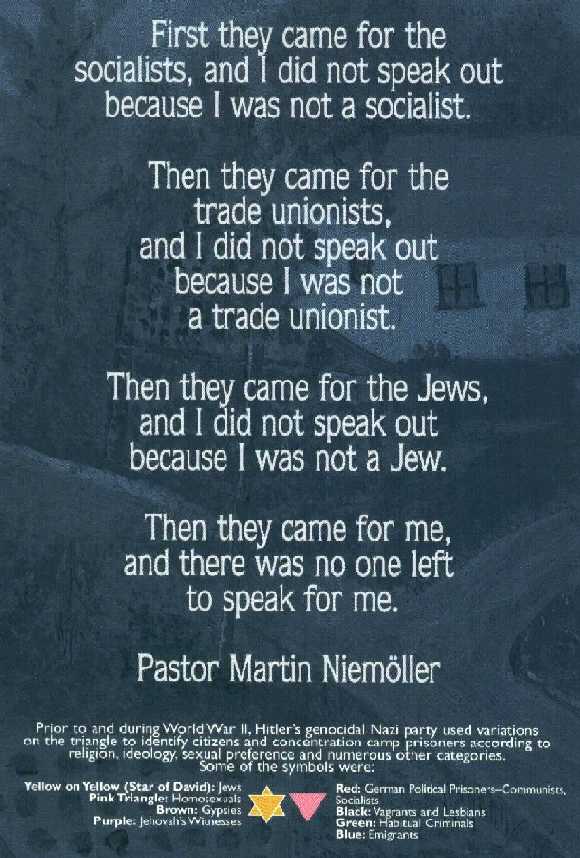
I see that Andrew Napolitano, a Fox News analyst referenced the infamous Martin Niemöller "first they came" statement regarding the TSA. Glenn Beck, in one of his daily rants against the dangers of progressive radicals, has also cited it. In these cases the quote has been trotted out to warn about the dangers of big government and progressivism. Slippery-slope arguments are perfectly fine political rhetoric, however, the constant analogizing of U.S. liberals to the Nazis, merits context about this quotation.

First, to the man who said it: Martin Niemöller. A conservative Lutheran minister who initially supported Hitler's rise to power,
Niemöller increasingly saw the Nazi regime as a danger that needed to be confronted. He began to speak out openly against the regime, and for that he was imprisoned in concentration camps from 1937 to 1945. His elegant words about the dangers of staying silent as different groups are targeted for persecution have become a profound and universal admonition.

That said, the quote is often misstated as referring only to Jews.
Professor Harold Marcuse at UC-Santa Barbara, whose expertise is in modern German history, has a very comprehensive website about the quotation and Niemöller. Based on that, I have placed below the most accurate version of it (emphasis added):

"First they came for the Communists, but I was not a Communist so I did not speak out.
Then they came for the Socialists and the Trade Unionists, but I was neither, so I did not speak out.
Then they came for the Jews, but I was not a Jew so I did not speak out. And when they came for me, there was no one left to speak out for me."

Yes, the people who they "first came for" were, in fact, Communists, socialists, and trade unionists. The reasons are fairly straightforward: the German left, particularly the more moderate (but still quite progressive) Social Democrats, were Hitler's chief opponents. On a practical level, they represented alternative sources of political power that Hitler needed to eliminate to assert complete control.

Ideologically, the situation is somewhat more complicated. Fascism is a frankly weird ideology, melding some left-wing ideas (a disdain for capitalism) with other views more associated with the political right (hyper-nationalism and militarism).* I hesitate to call Hitler "right-wing," but it is definitively the case that most everyone who identified as "left" in Germany opposed the Nazis.

Of course, Beck and his fellow travelers cannot be bothered with such details. Speaking of Beck however, remind me again, who gives regular speeches denouncing socialism and social democracy and insisting they must be combated vigorously? And who sees unions as a malignant force in our society? Well, let's see, Glenn Beck and . . . Adolf Hitler! Why, could it be, that Glenn Beck is a Nazi sympathizer?

Actually, no. Just because he opposes some of the ideologies that fought Nazism does not make him a Nazi. There were conservatives (like
Niemöller) who stood up against the Nazis too. But sadly, such historical complexities apparently do not fit into sarcastic, ill-informed rants made in front of a chalkboard.


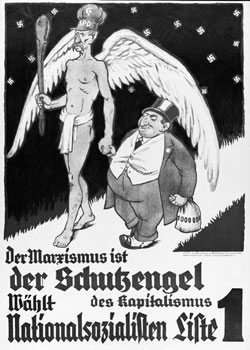
*Hopefully this image gives a sense of how difficult placing the Nazis on the conventional ideological spectrum is. This is a Nazi election poster from 1932, portraying Social Democrats and capitalists as part of the same evil; it states (paradoxically) that "Marxism is the patron saint of Capitalism."

Tuesday, November 23, 2010

A Very Hayekian Thanksgiving?

This past Sunday’s New York Times points to yet another battlefield in the war of historical interpretation that is one of many fronts in our current ideological conflict. This time, it is the stories of the initial failures and later successes of the Jamestown and Plymouth colonies that serve as convenient fables proving the universal superiority of the pure free market. Specifically, conservatives attribute these colonies’ initial hardships to the fact that “the first settlers were actually early socialists. They realized the error of their collectivist ways and embraced capitalism, producing a bumper year, upon which they decided that it was only right to celebrate the glory of the free market and private property.”

What this example demonstrates is that any historical episode can be employed to “prove” a political perspective’s assertions, as long as the analysis is kept generalized. Such as by claiming that Jamestown and Plymouth actually are evidence that markets lead to disaster and only heavy state intervention provides stability and growth. Observe.

In the case of Jamestown, a strong argument can be made that the obsession with profits over other community needs characterizing the colony's early years (as well as a conservative view on how capitalism best functions) caused many of the colony’s troubles. In its first decades, Jamestown was run by the seventeenth century version of a multinational corporation, the Virginia Company. As historian Karen Kupperman (who is interviewed in the article) describes, the drive for profit pushed by the company meant that “much attention was diverted from building essential infrastructure to the continuing effort to find those indispensable ‘marchantable commodities.’” To take one concrete example, the initial colonists sent by the Virginia Company included numerous individuals expert in mining and metallurgy, but fewer who knew about agriculture.

In fact, the private management of Jamestown proved so problematic that in 1624 the colony underwent a seventeenth century version of nationalization, becoming a royal colony administered directly by the crown. This change happened after a government investigation uncovered evidence of severe mismanagement by the Virginia Company, even as its directors collected scandalously large salaries. Jamestown's transformation to a royal colony had beneficial results; in its aftermath began a “great period of varied production” that included everything from brewing to gun making (oh Virginia).

So Jamestown proves the universal superiority of state-run institutions over private, profit-seeking ones? Hardly. There are of course state-run institutions that run with great efficiency. There are also private businesses that run competently. The crises of Jamestown's early years had as much to do with disease and bad weather as it did with how English colonists organized themselves economically. And while I cannot speak to the details, I would expect that studying a seventeenth-century royal colony can tell you as much about modern day state-run enterprises as studying radical Republicans circa 1866 can tell you about radical Republicans today (ie., a little, but not much).

How about Plymouth? The Times article notes the central thesis for conservatives lies with the changes in land distribution. Initially, Plymouth’s farm lands were communal (which proved disastrous) and then they were divided into individual plots (which proved successful). Not being an expert on this, it sounds plausible; collective agriculture has certainly seen its historical disasters, and a lot depends on the dynamics of the community. The article quotes scholars who note (as could be expected) a number of other factors were at play (such as the Pilgrims becoming better farmers with time). Furthermore, what the conservative account ignores is that, while the Pilgrims may have given up on communal ownership, they maintained policies around land to promote general social welfare. Looking over the right-wing “Great Thanksgiving Hoax” site, one is hard pressed to find the portion of Plymouth governor William Bradford’s decree on creating individual land ownership that also required farmers to set aside some of their food for those who needed it; “a portion for public fishermen &c. who could not work” to quote directly. Apparently even privatization could not kill welfare socialism.

As always, the take-away message is that simplified history does a disservice not only to understanding the past, but also for interpreting the present and building for the future.