Glenn Beck Has a Point (Part I in a series)
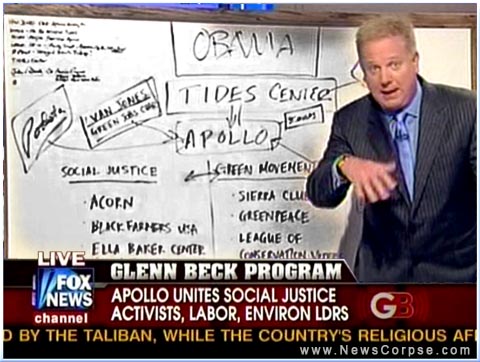
Yeah, you read that right. While Glenn Beck’s version of the past, present, and future has been well analyzed (and challenged) elsewhere, I would like to address one strain of his critique from a slightly different angle. For anyone who’s watched Beck’s show (or seen Jon Stewart’s parodies of it) the sight of Beck scrambling around various blackboards, drawing out the nefarious connections between far-left radicals and the Obama administration are as familiar as the morning commute. Often such connections are, at best, overblown and mostly exist as fantasies easily discounted or disproven. However, Beck’s insistence that radicalism has seeped into the policies and politics of past U.S. presidents actually bears some weight (though not as much for the Obama administration, which, in my opinion, could benefit from some more heterodox, left-of-center voices having the president’s ear). Democratic and progressive presidential administrations have been influenced by more radical actors in this country, and that has often been for the good of the U.S. While there’s a long history of radical movements making demands on the government, I would like to focus on one aspect of this relationship: the role of individuals who had (or continued to) travel in more radical circles who ended up becoming key influences on or members of past presidential administrations. This has been a specific fascination for Beck, visible most infamously in his campaign against presidential adviser Van Jones.
Radicals in the White House
In the next few posts I will explore a few “radical” figures who have become members of past administrations and used those perches to fight for social change. First, it is worth saying a few words about such individuals more generally. What do I mean by saying there have been “radical figures” in the White House? Primarily these have been individuals who have been appointed to various commissions, agencies, or cabinet posts whose political beliefs and experiences were forged (at least in part) through encounters with left-wing ideas and groups (the Socialist Party for example). Contra Beck, most of these individuals, by the time they reach an administration job, have moved towards more “moderate” positions (though not always) and such figures invariably hold very pragmatic views about making social change (otherwise they would not have the desire or ability to work for a U.S. president). Even with these caveats, their goals have often been thwarted and their influence should not be overstated. Despite the many obstacles in their way however, some of the key legislative and political progress on labor rights, social insurance, and civil rights in the U.S. are partially because of such figures.
So stay tuned; first up we'll add more kindling to Beck's Woodrow Wilson hate fire through a look at attorney and labor champion Frank Walsh.
No comments:
Post a Comment